
Measured
Sheet force and direction
Each sensor measures the load on the sheet and the angle it pulls from, continuously.
How it works
SailGauge measures the forces your sails generate in real time. As you adjust sail trim, SailGauge shows how those forces change — helping you understand the effect of each adjustment and make more informed decisions.
Step 1 · Measure
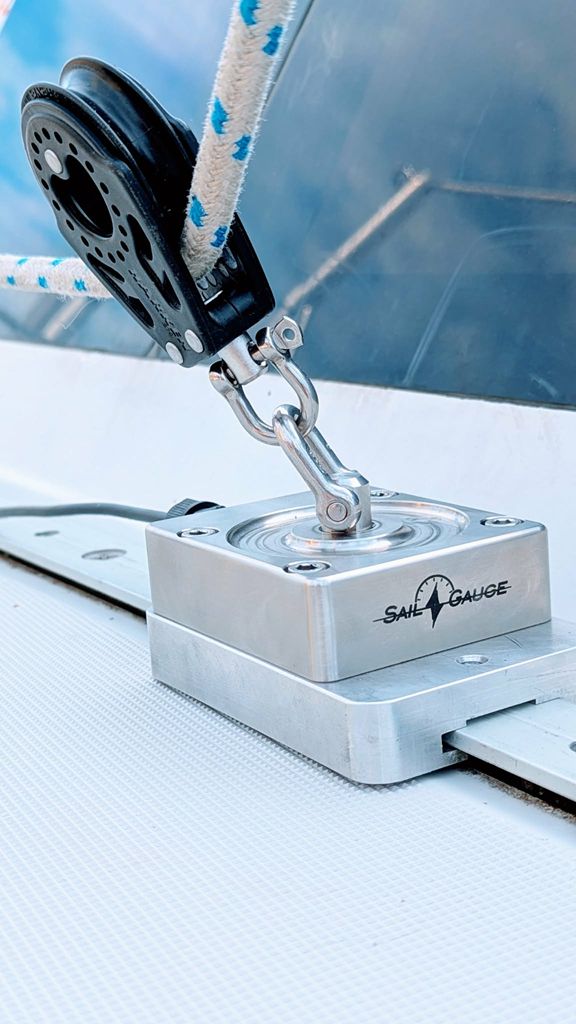
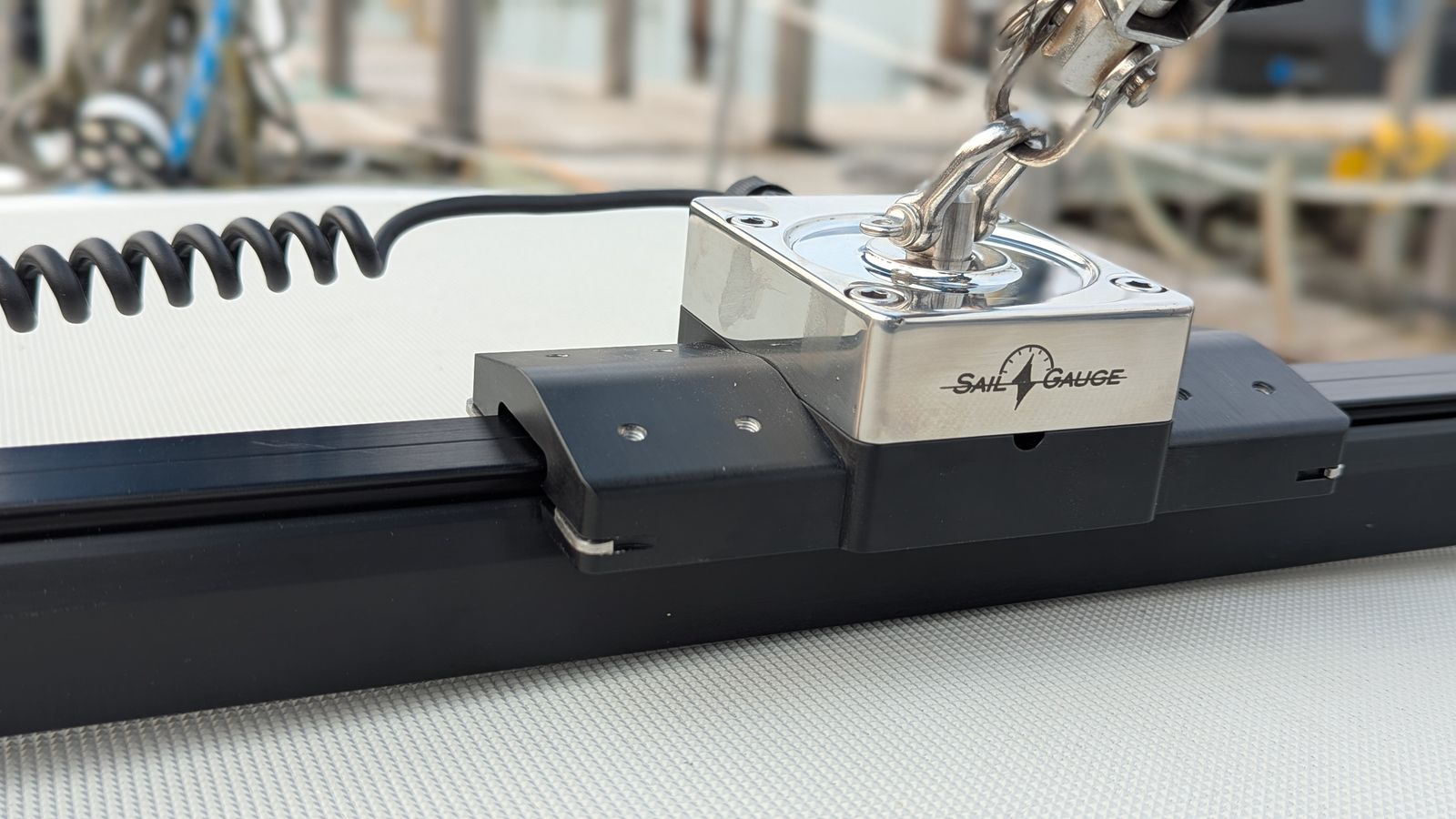
The patented system starts with a SailGauge sensor at the base of the sheet block for each sail. The sensor measures how hard the sheet pulls and the direction it pulls from, and has no moving parts to fail.
Wind instruments tell you what the air is doing. SailGauge adds what your sails are doing.
Step 2 · Calculate
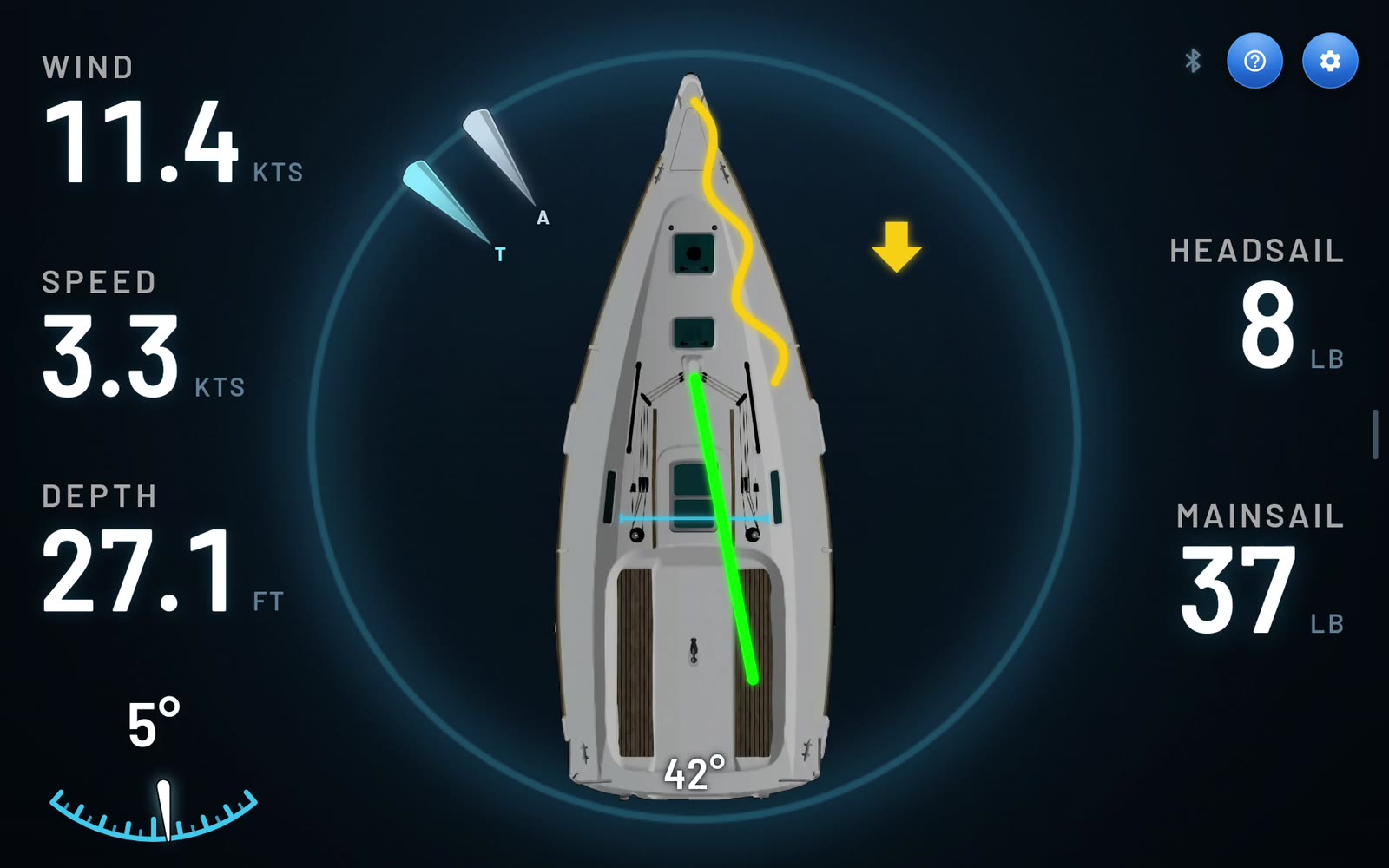
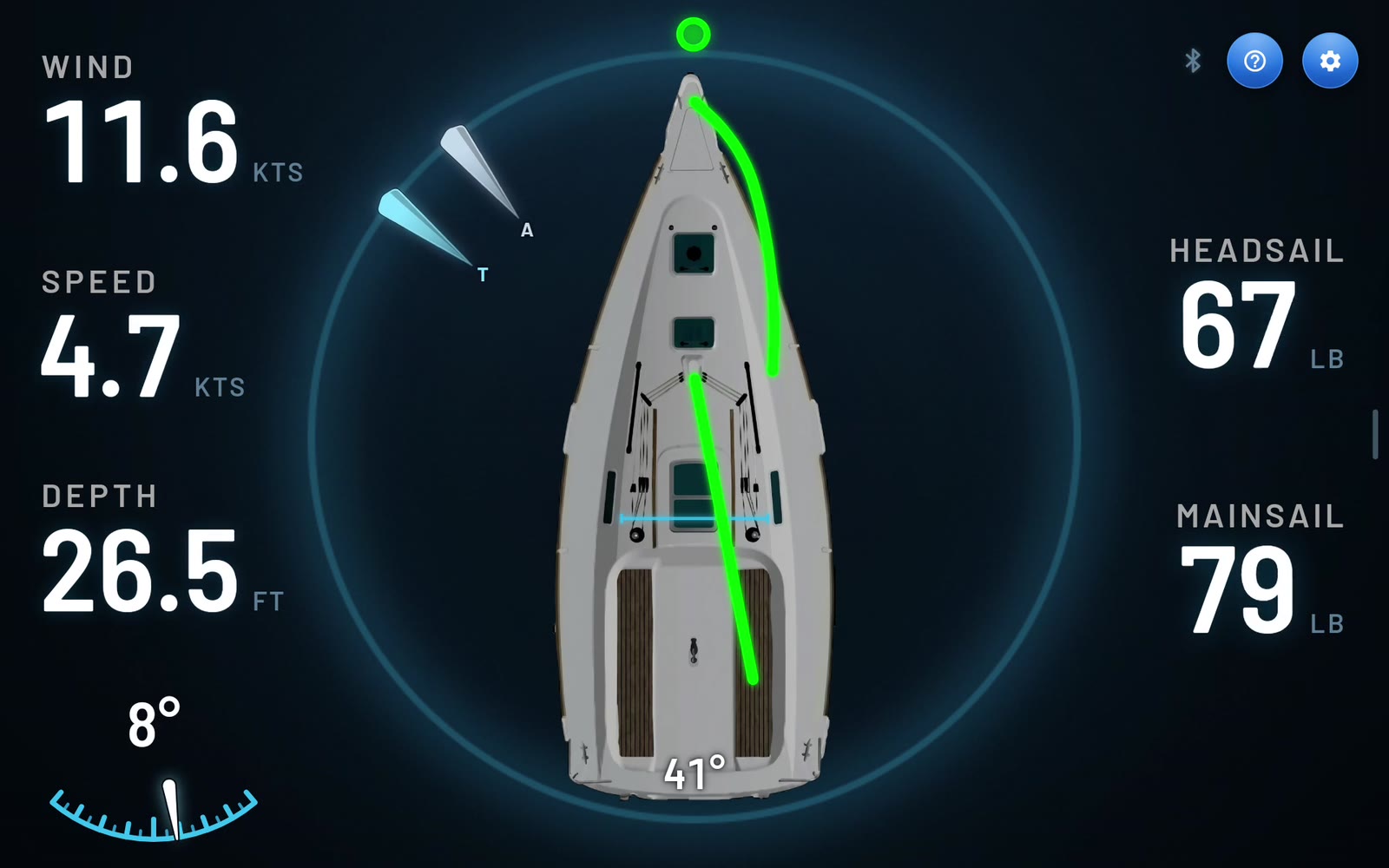
Every sail generates forces in different directions. Some help move the boat forward, while others push it sideways and contribute to heeling. Using real-time force and angle measurements, together with a few measurements of your boat, SailGauge calculates the forces each sail is producing.
Measured
Each sensor measures the load on the sheet and the angle it pulls from, continuously.
Your boat
Sensor positions relative to the mast and furler, and your sail dimensions, give the angle of each sail.
Calculated
Combining force and angle, SailGauge separates the force driving the boat forward from the force pushing it sideways.
Trim and measurement
Ease or tighten a sail, and the forces it produces change. SailGauge lets you see those changes as they happen, rather than judging every adjustment by feel alone.
Step 3 · Understand
As you sail, SailGauge records the forward force your sails produce across wind angles and wind speeds. That builds a reference of the trim that has produced the most drive on your boat for each point of sail.
With that reference, SailGauge can show how your current trim compares and which way to adjust — on the display, or on your phone or tablet. It provides another source of feedback, whether you're learning or refining your technique.
See what the system shows youInstallation
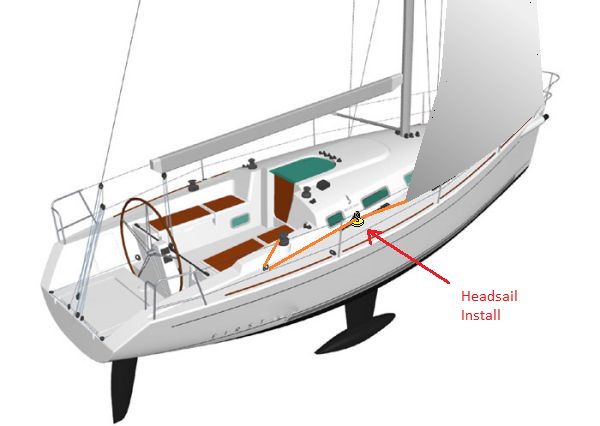
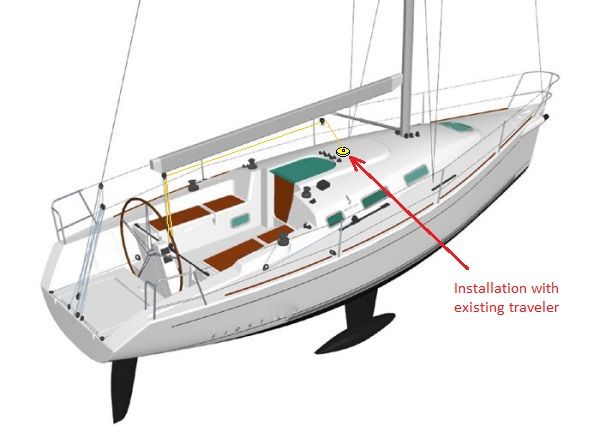
The SailGauge transducer mounts in place of the padeye for the sheet blocks of the headsail or mainsail. No modification of the rigging is necessary. For the mainsail, the sensor can mount to the traveler or to a deck routing block.
SG1000 is designed for owner installation. Instructions and Help Desk support are provided.
Explore the complete system, or reserve an SG1000 through Early Access.